Quick answer
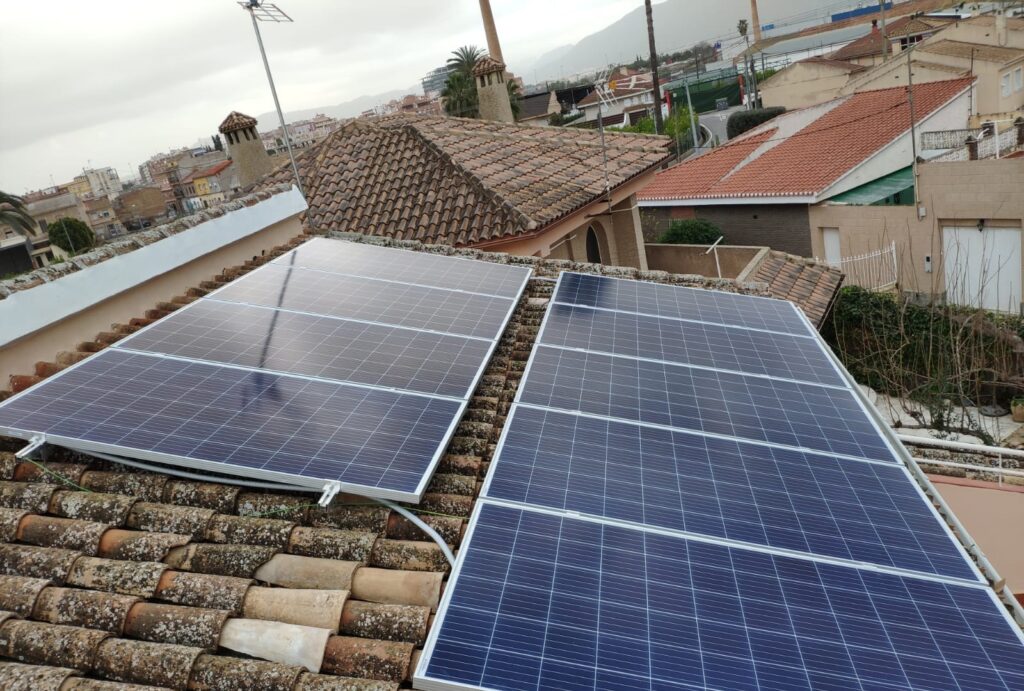
Investigate roof condition before committing to rooftop solar. If the roof needs replacement, doing that work first avoids removing and reinstalling panels for the same roof work later. A recently replaced roof still needs a solar-suitability assessment; an aging roof needs a documented repair-or-replacement decision—not just a salesperson’s approval. ENERGY STAR recommends addressing needed roof renovations before solar installation. (energystar.gov)
Before signing: collect roof records, request professional assessments, clarify warranty responsibilities, and obtain a written explanation of future removal and reinstallation charges.
For U.S. homeowners considering conventional rooftop solar panels. Requirements and contract terms depend on the property, jurisdiction and equipment.
1. Start with roof records, not an age cutoff
Your first question should be: What do we know about this roof, and what still needs checking?
Find the installation or replacement invoice, roofing product information, warranty documents, repair history and any inspection reports. If the installation date is unknown, the Department of Energy suggests checking local building-permit records. Ask what the records actually cover rather than assuming every permit represents a complete replacement. (energy.gov)
Build a short file for both the roofer and solar installer:
- Roof installation date and the documents supporting it.
- Roofing material and manufacturer, if known.
- Previous leaks, repairs and storm-damage reports.
- Existing roofing warranties.
- Planned changes, such as a skylight or addition.
- Areas with different installation or repair dates.
Manufacturer guidance can inform the discussion, but it is not a universal rule. For example, GAF’s technical bulletin recommends that GAF shingles beneath a new photovoltaic array be less than five years old for optimal longevity. That is GAF-specific guidance, not a nationwide requirement to replace every older roof. (gaf.com)
Use age to trigger questions. Do not treat it as either an automatic failure or proof that a roof is ready.

2. Request a condition assessment before finalizing solar
The Department of Energy identifies a solar installer, roofing expert or structural engineer as potential resources for determining roof suitability. Ask who will assess your property and what their assessment includes. (energy.gov)
For the roofing assessment, request written answers to these questions:
- Does the proposed panel area need repair or replacement before installation?
- What findings support that recommendation?
- Is the recommendation different for other roof sections?
- What remains uncertain without further investigation?
- What future roof work should be included in ownership planning?
Ask for dated photographs taken by the professional. A useful report should distinguish observed condition from predictions about remaining service life. Do not ask anyone to guarantee an exact replacement date.
Also ask whether the assessment covers only the roof surface or includes accessible underlying components. Record exclusions so another professional can address them where needed.
If roof work is recommended, have the roofer and installer coordinate before either scope is finalized. ENERGY STAR specifically recommends telling the roofing company about the planned solar installation and asking whether it will return afterward to check for installation-related roof damage. (energystar.gov)
Keep this as a planning task. Leave roof access, electrical isolation, mounting work and repairs to appropriately qualified professionals.


3. Separate roof condition from structural suitability
“Does the roof need replacing?” and “Can this structure support the proposed solar installation?” are different questions. DOE recommends confirming that the roof can support solar panels as part of the installation process. (energy.gov)
Ask your installer:
- Who is responsible for the structural evaluation?
- What property information and site observations will they use?
- Does this project need a structural engineer?
- Are any reinforcement costs excluded from the proposal?
- What happens to the price and schedule if additional work is identified?
- Who confirms the applicable permitting and inspection requirements?
Do not assume that every residential project follows the same approval route. As checked on November 25, 2026, the City of San Diego offers a self-issued residential rooftop solar permit without plan review only for projects meeting specified criteria. Those criteria include not requiring structural review and not involving work such as roof-structure modifications that would require a Combination Building Permit. This is a city-specific example, not a rule for other jurisdictions. (sandiego.gov)
For your address, ask the contractor to identify the relevant building authority and explain the proposed approval pathway in writing.
4. Clarify mounting details and warranty responsibilities
Ask for the proposed roof-attachment product and its installation documentation—not merely a statement that the mounting system is “waterproof.”
The documentation should match the actual roof and proposed installation. For example, IronRidge’s FlashFoot2 manual specifies flashing placement, attachment to rafters and roofing-manufacturer-approved sealant. Its water-seal ratings also state applicable roof-material and slope conditions. These details illustrate why a product name alone is not enough to establish suitability. (files.ironridge.com)
You do not need to supervise installation techniques. Instead, ask the installer to confirm which instructions apply and how compliance will be documented.
Request a written responsibility table:
| Issue | What to clarify |
|---|---|
| Roofing-material defect | Which manufacturer warranty applies, and who submits the claim? |
| Roofing workmanship | Who responds to a problem with the roof installation? |
| Leak associated with a solar attachment | Who investigates, repairs and pays under the contract? |
| Solar equipment defect | Who handles equipment claims, labor and access? |
| Panels obstructing roof repair | Who arranges removal, storage and reinstallation? |
Avoid both blanket claims: “solar always voids the roof warranty” and “the roof warranty covers everything.”
GAF’s bulletin says solar panels do not affect coverage under its limited warranties, but it also makes the owner responsible for removing panels at the owner’s expense when access to affected shingles is needed. That is a concrete example of why continuing warranty coverage does not necessarily mean panel-access costs are covered. Check your own documents. (gaf.com)
5. Price removal and reinstallation as a complete service
For this decision, the useful number is not a generic national removal price. It is a written, property-specific scope covering both removal and reinstallation.
As one provider-specific example, Tesla describes removal and reinstallation as separate processes with separate service agreements. Its guidance directs customers to their contracts for standard-work pricing and says scope affects pricing where contracts use “competitive pricing.” Those terms should not be assumed to apply to another provider. (tesla.com)
Request an itemized estimate addressing:
- Removal of the equipment necessary for the roof work.
- Storage location, handling and responsibility for damage.
- Reinstallation labor.
- Replacement mounting parts or other required components.
- Any design, permitting or inspection work.
- Testing and confirmation that monitoring works afterward.
- Exclusions and circumstances that trigger additional charges.
Also ask whether the estimate is fixed, an allowance or merely today’s nonbinding indication. A current estimate should not be presented as a guaranteed future expense.
Scheduling deserves its own questions: Who books each contractor? What must happen before reinstallation can be scheduled? Who confirms that the roof is ready?
Tesla’s published process illustrates the need to investigate these details: it identifies separate scheduling steps, customer-provided panel storage, and possible permitting or system-upgrade requirements. These are examples to ask about, not universal conditions. (tesla.com)
6. Compare a recently replaced roof with an aging roof
Consider two planning scenarios—not predictions about any particular home.
Recently replaced roof: The homeowner has the invoice, product details and warranties. The next step is to verify condition, structural suitability and mounting compatibility. Recent replacement is useful documentation, not a substitute for assessment. DOE recommends a roof-suitability evaluation as part of going solar. (energy.gov)
Aging roof: The homeowner has incomplete records and a roofer recommends replacement before panels are installed. The next step is to compare coordinated roofing and solar scopes against installing solar first and arranging roof work later. ENERGY STAR’s recommendation to address needed roof renovations first directly addresses that sequencing problem. (energystar.gov)
For a worked comparison, use actual written bids rather than invented national prices:
| Cost entry | Replace roof before solar | Install solar, reroof later |
|---|---|---|
| Solar installation | Enter the applicable solar bid | Enter the applicable solar bid |
| Roof replacement | Enter the current roofing bid | Enter a clearly labeled future-cost assumption |
| Panel removal and reinstallation for that reroof | Not needed for that pre-solar replacement | Enter the complete service estimate |
| Additional costs | Enter stated exclusions | Enter stated exclusions and any separately estimated electricity costs during downtime |
Add each column, but keep current bids separate from future assumptions. If comparing costs across different years, ask for a time-adjusted financial comparison rather than treating the simple totals as equivalent.
Do not label the entire roofing bill a solar expense if the roof would need replacement anyway. The solar-related comparison is about changes in timing, additional access work and other documented differences. Nor should you assume replacing the roof now eliminates all roof work during solar ownership.
No defensible dollar total is possible without your property assessment and quotes.
7. Use a final pre-contract checklist
Before authorizing installation, aim to answer these questions:
- Condition: Do I have written findings, rather than a verbal “looks fine”?
- Timing: Have I resolved recommended roof work before committing to the installation schedule?
- Structure: Is responsibility for evaluating support and obtaining approvals clear?
- Mounting: Is the proposed attachment system identified?
- Coverage: Do I know who handles a roof leak, equipment problem and panel-access expense?
- Future service: Does the removal estimate include reinstallation, and how long is it valid?
- Records: Will I receive the final plans, permits, warranties and installation photographs?
The common mistakes are using roof age as the only test, accepting a vague warranty promise, and comparing removal-only pricing with a complete removal-and-reinstallation service.
The practical goal is not to prove that the roof will never need attention. It is to make a documented decision about its condition before panels make future roof work more complicated. ENERGY STAR’s roof-first guidance and DOE’s suitability checks provide the starting point; your professionals and signed scopes must resolve the property-specific details. (energystar.gov)